
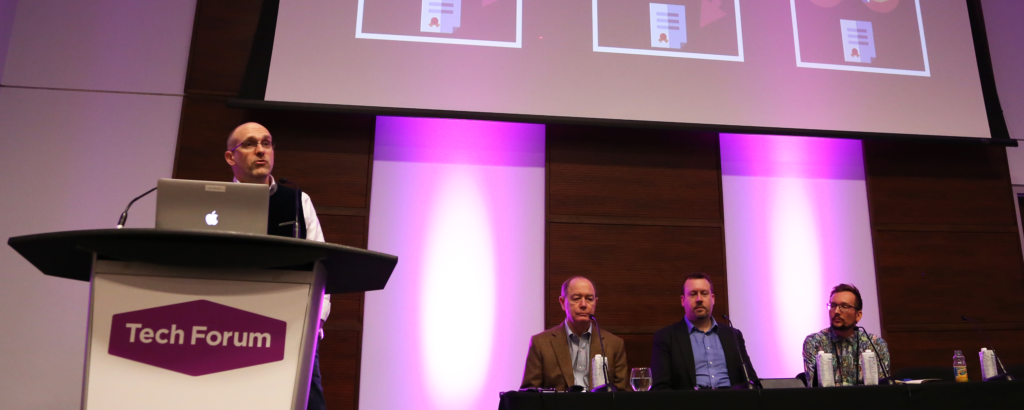
Join a panel of experts from the publishing industry and beyond for an overview of blockchain technology: the opportunities and potential roadblocks it could present the publishing supply chain.
Publishing
88 results

Ashleigh Gardner dives deep into case studies and explores how Wattpad approaches data and discovery to identify hidden stories that translate into publishing success.
Inspired by the success of premium episodic television, Molly Barton launched Serial Box. In this session she discusses how their content differs from books delivered in pieces.
Robert Wheaton suggests that publishing’s “old world” business model doesn’t constitute dead weight, but rather a secret weapon.
Benjamin Young takes a look at some of the highlights from Tim Berners-Lee’s 1989 proposal “Information Management” and focuses them on the world of publishing.

Are we biased towards long books?
- March 24, 2017
Journalist Hillary Frey spent a year with her company Matter Studios trying to understand why the publishing industry has shied away from fast, timely reads, and searching for ways to produce them.
BookNet’s Pamela Millar presents all the new and upcoming projects (like Loan Stars) that are innovating to help publishers and libraries work together towards their common goal: getting books into the hands of readers.

Encouraging grassroots innovation at a legacy publisher
- April 1, 2016
When you’re working at a big publisher, what kinds of innovation can you introduce in ebook/digital processes while still keeping up with the day-to-day work?

Publishing in the age of globalization: The wonderful, the worrisome, and what’s next
- March 12, 2015
In a rapid-fire overview of the global publishing landscape, Ed Nawotka, considers the macro-trends and some of the micro-trends at play.

As more and more publishing houses bring in talented digital employees there’s a likely clash of cultures on the horizon.

Keith Fretz (Scholastic) explores three main components of a successful transmedia property: attracting and retaining interest, using usage data to inform your product, and maintaining a vibrant community.
Brian O’Leary explores how conversion architectures work and how they apply to current—and, more importantly, future—book content models