
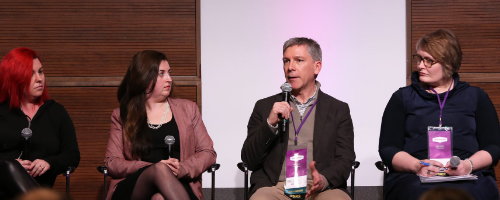
These panelists have one goal: Get more books into the hands of readers. They talk about their efforts in working together to support book sales in ways that are creative, collaborative, and constructive.
2019
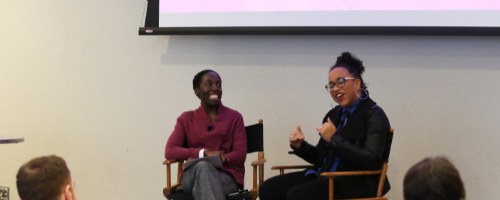
Jennifer Baker (Minorities in Publishing podcast) interviews author and founder of the Festival of Literary Diversity, Jael Richardson, on craft, publishing, and formulating equity within the literary community.
In this talk, Teresa Elsey (Bridge International Academies) answers the question: “How does my company build ebooks that will still work in two years, or five, or ten?”

We waste weeks of our lives every year doing repetitive tasks. What if you could automate things with a few scripts? Easily translate data, execute multiple commands at once, get your time back!
A case study of moving an online bookstore from one website to another — an epic tale, including the unexpected problems they encountered along the way and how they were solved or are being solved.
Learn how Penguin Random House Canada adopted an audio-first strategy, hired Canadian acting talent, and recorded in studios both in-office and across the country.
To understand the world today, we need to understand code and its consequences. Clive Thompson gives us a definitive look into the heart of the machine.
The panelists share their different approaches to applying ML/AI at their companies, highlighting both strengths and limitations, as they consider a vision of a more automated publishing workflow.
In this panel, library staff share their latest data-driven initiatives that are revolutionizing collections and patron management to increase efficiencies, insights, and opportunities.

In this highly practical session, Ritu Bhasin draws on the latest neuroscience and leadership research to explore how discomfort with differences manifests within the publishing industry.
Over the summer of 2018, the Association of Canadian Publishers conducted a baseline survey to measure the diversity of the Canadian book publishing workforce. This session shares the highlights.
In this workshop, we present the CSS authored at Macmillan as a case study and explore alternative ways to code and style complex content with CSS, with a focus on grid and media queries in EPUBs.