
Shannon Culver (eBOUND Canada) and Sabina Iseli-Otto (National Network for Equitable Library Service) share some of the lessons learned at this year’s Accessible Publishing Summit.
Search Results for:
91 results
The user’s perspective: Accessibility features in action
- March 19, 2019
Accessibility and Usability Consultant, Ka Li, from the National Network for Equitable Library Service, talks about how accessibility features are used (or can’t be used) by people with print disabilities.
The past, present, and future of digital publishing that hasn’t, isn’t, but may still meet the promise of the web
- March 19, 2019
What might the future of ebooks look like? Are Web Publications real? This session is part history lesson, part unhinged rant, part futile attempt to predict the future.
Building ebooks that last
- March 19, 2019
In this talk, Teresa Elsey (Bridge International Academies) answers the question: “How does my company build ebooks that will still work in two years, or five, or ten?”
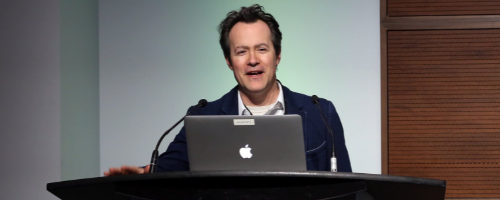
To understand the world today, we need to understand code and its consequences. Clive Thompson gives us a definitive look into the heart of the machine.
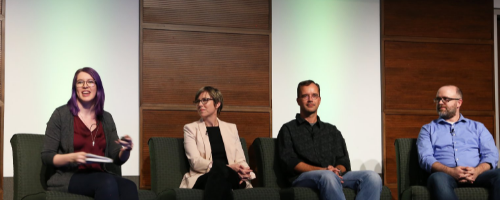
The panelists share their different approaches to applying ML/AI at their companies, highlighting both strengths and limitations, as they consider a vision of a more automated publishing workflow.
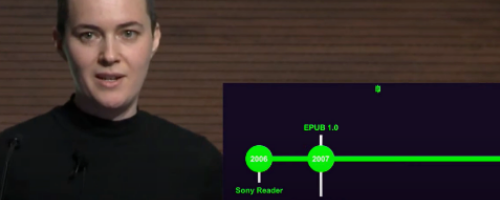
Nellie McKesson (Hederis) explains the problems that publishers are facing, and how web-based pagination can offer a solution.

XSLT 3 for EPUB and print
- March 18, 2019
Learn about using XSLT to produce EPUB2 and EPUB3 books from XML or XHTML input as well as PDF for print with CSS or XSL-FO.
From the definition of accessibility requirements, to the actual production, to testing and metadata editing, accessibility needs to be taken into account through the entire production workflow.

Faking a grid
- March 18, 2019
In this workshop, we present the CSS authored at Macmillan as a case study and explore alternative ways to code and style complex content with CSS, with a focus on grid and media queries in EPUBs.